Breaking the Failure Cycle: How to Push Through Avoidance and Excuses in Business
Every entrepreneur starts out with excitement. A new strategy, a fresh opportunity, or the launch of a business feels energising and full of possibility. But for many, that excitement fades. Avoidance creeps in, excuses begin to take over, and before long, blame shifts elsewhere. The result? Momentum stalls and goals are left unfinished.
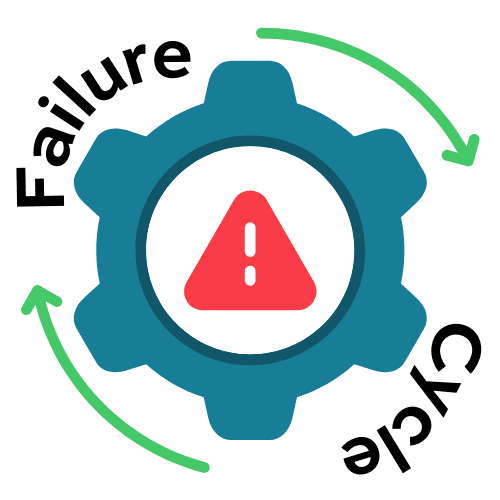
At EBS, we call this pattern the Failure Cycle, and understanding it is key to breaking through barriers in business growth.
The Four Stages of the Failure Cycle
-
Excitement
At the beginning, energy and motivation are high. You commit to the new idea, strategy, or system with full force. In personal life, this often looks like signing up for a gym membership in January. In business, it may be the thrill of a new marketing strategy or system rollout. -
Avoidance
Over time, the initial energy dips. You still show up, but not at full capacity. Tasks are cut short, effort is reduced, and uncomfortable actions are sidestepped. -
Excuses
As challenges arise, reasons not to continue become easier to justify. The most common one for business owners? “I just don’t have enough time.” Excuses act like roadblocks that feel logical in the moment but ultimately halt progress. -
Blame
Eventually, the failure to achieve the original goal gets attributed elsewhere, the system, the economy, the market, or even team members. But in reality, the cycle has already run its course.
The Critical Moment: From Excitement to Avoidance
The turning point in the Failure Cycle is when you slip from excitement into avoidance. Catching this shift early is crucial.
For entrepreneurs, this might look like losing momentum in:
-
Marketing campaigns (avoiding testing and measuring results)
-
Financial planning (avoiding tough cashflow reviews)
-
Leadership (avoiding difficult conversations with team members)
The key is recognising avoidance before excuses and blame set in.
Why the Failure Cycle Happens
Through decades of coaching business owners, we’ve identified four main reasons people get stuck in the Failure Cycle:
-
Unclear or unrealistic goals
If goals are either too lofty or not ambitious enough, motivation struggles to sustain. -
Loss of focus
Without clear visual reminders or accountability, attention drifts and priorities shift. -
No action plan
Even with the right goal and focus, lack of a step-by-step roadmap can cause progress to stall. -
Mental barriers
The biggest constraint in any business is often mindset. Fear, doubt, or limiting beliefs prevent follow-through more than systems or resources ever will.
Breaking Free from the Cycle
The good news? Once you can spot the cycle, you can stop it.
-
Identify avoidance early: be honest when effort begins to slip.
-
Revisit your goals: ensure they are clear, measurable, and motivating.
-
Reinforce focus: use tools like vision boards, accountability partners, or coaching check-ins.
-
Create a clear action plan: map the steps so progress is achievable.
-
Challenge mental barriers: work with a coach or mentor to break limiting beliefs.
At EBS, we coach business owners to recognise these patterns quickly and build strategies that keep momentum moving forward. The business owner who succeed aren’t the ones who never fall into the cycle, they’re the ones who know how to break free from it.
Final Thought
The Failure Cycle is a principle every business owner should be aware of. If you find yourself slipping from excitement into avoidance, it’s a signal to pause, reset, and take action before excuses and blame set in.
Growth happens when you notice the cycle, and choose to break it!